

Tongue Tie & Lip Tie Support in Tulsa - Chiropractic Care Before & After Revision

Your baby has been diagnosed with a tongue tie or lip tie — or you suspect one based on latch difficulties, clicking during feeding, or poor weight gain. You may be considering a frenectomy, or your provider has already recommended one.
What many families don't realize is that the frenulum restriction is only part of the picture. The compensatory tension patterns your baby has developed throughout their jaw, neck, and spine play a critical role in feeding outcomes — and addressing those patterns through gentle chiropractic care can make all the difference.
At Free Spirit Chiropractic, our pediatric chiropractors provide specialized bodywork before and after tongue tie revision to give your baby the best possible results.
What Are Tongue Ties and Lip Ties?
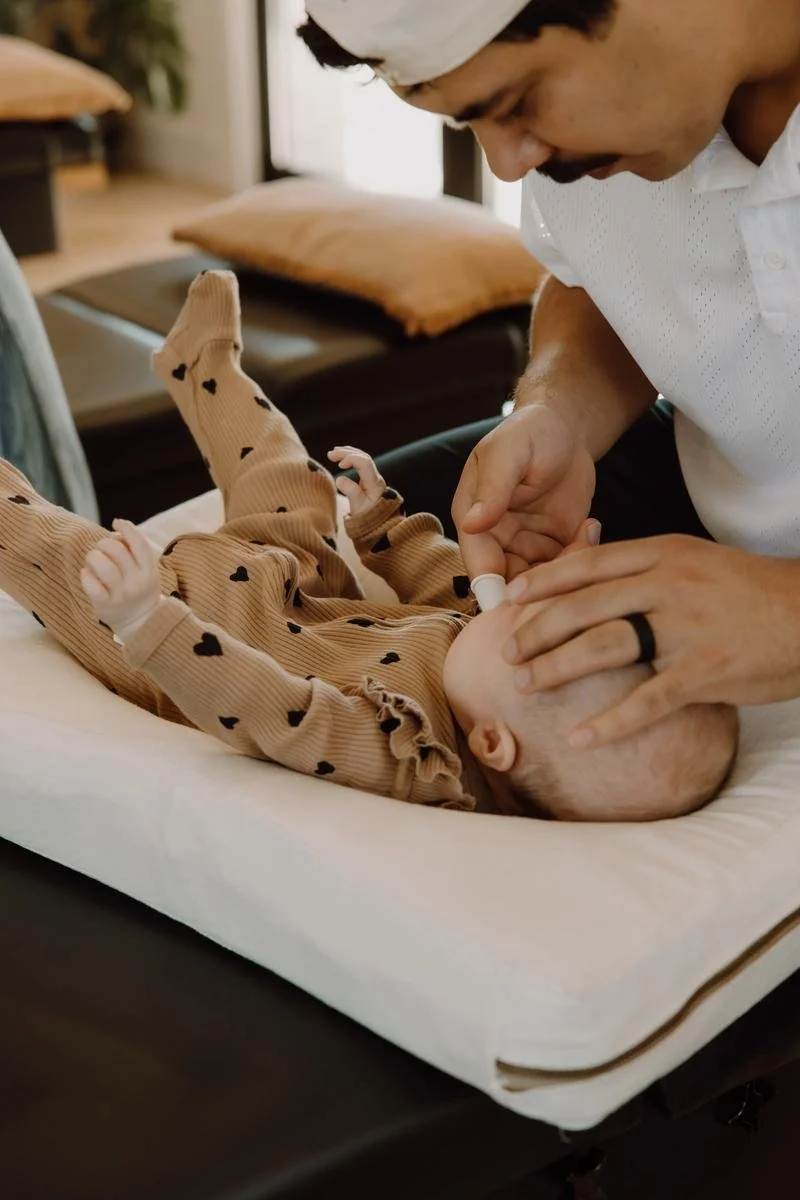
A tongue tie (ankyloglossia) occurs when the lingual frenulum — the band of tissue connecting the tongue to the floor of the mouth — is too tight or short, restricting tongue movement. A lip tie is a similar restriction of the labial frenulum connecting the upper lip to the gum.
Signs your baby may have a tongue or lip tie:
Shallow or painful latch that doesn't improve with positioning
Clicking or smacking sounds during feeding
Poor weight gain despite frequent nursing
Excessive gassiness or reflux from swallowing air
Maternal nipple pain or damage despite proper positioning
A heart-shaped tongue tip when baby cries

Why Chiropractic Care Matters for Tongue Ties

When a baby's tongue or lip is restricted, they develop compensatory tension throughout their body — the jaw clenches tighter, neck muscles strain to compensate for limited tongue movement, and the upper cervical spine often develops subluxations that further disrupt the neurological coordination needed for effective feeding.
Simply releasing the frenulum without addressing these compensation patterns often leads to incomplete improvement. This is why many tongue tie specialists and pediatric dentists recommend bodywork before and after revision.
Before a release or revision, chiropractic care releases tension in the jaw, neck, and cranial structures, improves cervical mobility, and prepares oral tissues for better post-release function.
After a release or revision, chiropractic care supports optimal healing, retraining of the suck-swallow-breathe reflex with improved tongue mobility, and continued release of compensatory tension as baby learns new movement patterns.
Our Approach
Gentle Cervical Adjustments
Light fingertip pressure addresses upper cervical subluxations that contribute to restricted oral motor function and feeding difficulty.
Craniosacral Therapy
This gentle technique releases tension in the cranial bones, jaw, and fascial connections between the skull and tongue — directly supporting the structures involved in tongue mobility and feeding coordination.
Jaw and Soft Tissue Work
This gentle technique releases tension in the cranial bones, jaw, and fascial connections between the skull and tongue — directly supporting the structures involved in tongue mobility and feeding coordination.
Collaborative Care

We work alongside tongue tie specialists, pediatric dentists, lactation consultants, and pediatricians. If you need a frenectomy referral in the Tulsa area, we'll connect you with trusted specialists. For nursing mothers, our postpartum chiropractic careaddresses the upper back and neck tension from difficult feeding.
Get Tongue Tie Support in Tulsa
Free Spirit Chiropractic is located at 4312 E 51st St in Tulsa, serving families throughout Midtown Tulsa, South Tulsa, Brookside, Broken Arrow, and Jenks.
Frequently Asked Questions
-
Ideally both. Pre-release bodywork prepares the muscles and nervous system for better outcomes, and post-release care supports healing and functional retraining. If you can only choose one, pre-release care is especially valuable.
-
We typically recommend multiple visits before the procedure and afterward, though every baby's needs are different. We prefer 3-4 weeks before the release and after to really provide optimal healing long term.
-
We do not diagnose or perform tongue tie revisions. We assess and treat the musculoskeletal and neurological components that affect feeding function, and we refer to qualified specialists for diagnosis and revision when indicated.
-
We do not accept insurance.